

Choosing a residential entry gate presents unique considerations for homeowners. A gate isn’t just about aesthetics or marking property boundaries — it’s a long-term investment that must provide security, privacy, and curb appeal, while enduring daily use and various environmental factors. Choosing the wrong gate materials or design can lead to premature wear, structural issues, or costly repairs within just a few years.
By understanding the critical trade-offs between different materials, styles, and security options, you can make an informed decision that balances beauty, durability, and function. Whether you’re protecting a front entrance, securing a backyard, or enhancing a driveway, the right gate should serve your family for decades without constant maintenance or replacement. This guide by Kaiser Garage Doors & Gates empowers homeowners to confidently select the perfect residential gate for their property.
Installing a residential gate delivers both practical and financial advantages for homeowners. Beyond the immediate visual impact, a well-designed gate addresses security concerns while potentially increasing property value.
Improved Security and Privacy
A physical gate serves as your property’s first line of defense. It creates a clear boundary that deters casual trespassers and opportunistic criminals who typically seek the path of least resistance. When someone must actively bypass a gate to access your property, that extra barrier often redirects them to easier targets elsewhere.
Beyond deterrence, gates create a private, secure space for your family and pets. Children can play in front yards without immediate exposure to street traffic, and pets enjoy outdoor time within defined boundaries. The psychological benefit of controlled home access shouldn’t be underestimated — many homeowners report feeling more at ease knowing their property has a physical barrier.
While property crime trends fluctuate, protecting your home remains a top priority. According to the FBI’s Crime Data Explorer, burglary continues to be a concern for American homeowners. A physical barrier like an entry gate is an effective deterrent against such property crimes, particularly when combined with other security measures like lighting and visibility.
Increased Curb Appeal and Home Value
A well-designed gate makes a powerful first impression. It’s often the first architectural element visitors notice, and can set the tone for your entire property. Your choice of gate can reflect your home’s character and your attention to detail.
This aesthetic investment translates into financial value. Security and real estate industry experts indicate that quality gates can increase a home’s market value considerably. Potential buyers interpret a professional gate installation as evidence that a property is well-maintained and secure — qualities that command premium prices in competitive markets.
The right gate design can improve your home’s exterior aesthetic by complementing your architecture and landscaping. When materials, style, and proportions align with your home’s design language, your custom gate becomes an integrated feature rather than an afterthought.
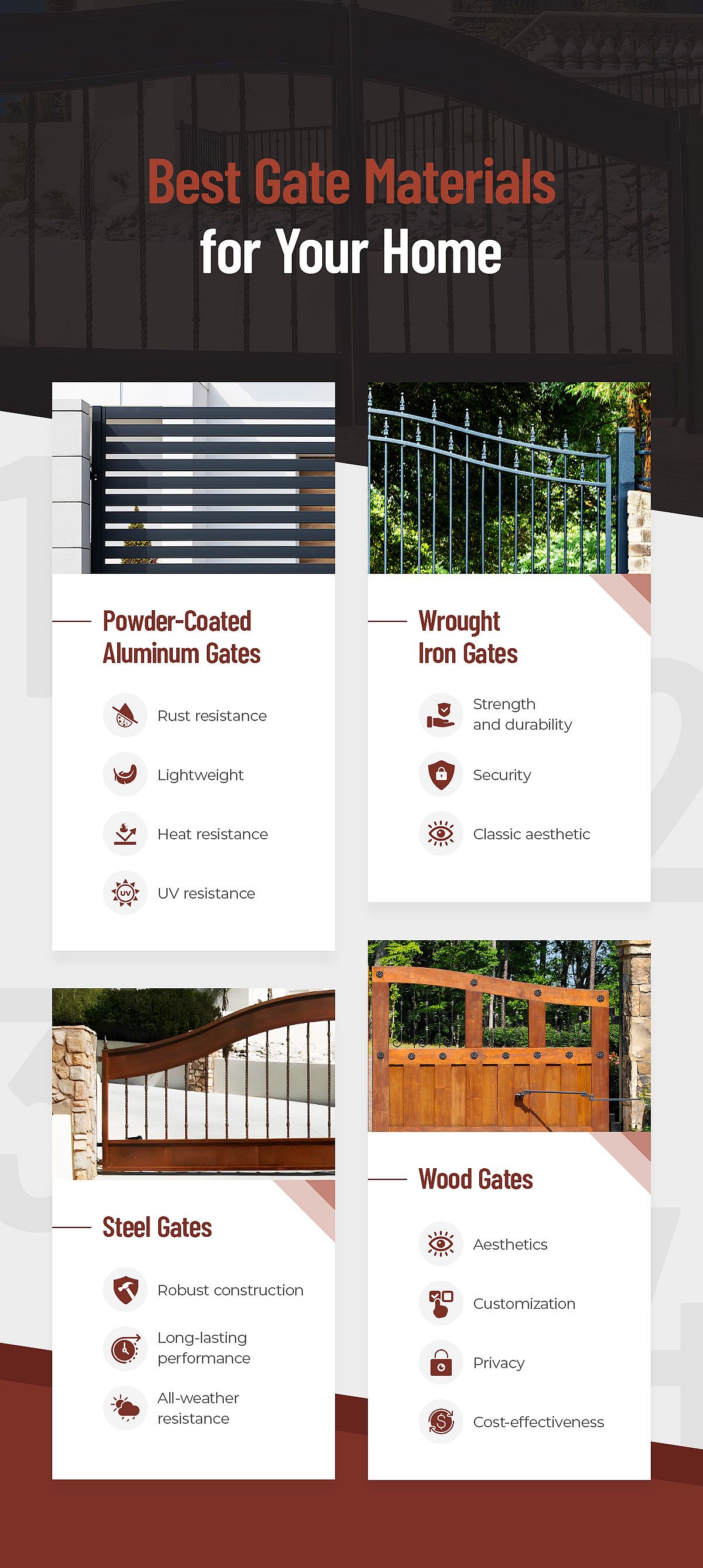
Material selection is the most critical decision homeowners face when choosing a gate. Beyond suiting your home’s climate, choosing the right material determines whether your gate requires constant repairs or performs reliably for decades.
Powder-Coated Aluminum Gates
Aluminum has emerged as a popular choice for modern residential gates, offering a practical balance of durability and weight.
The powder coating process creates a protective finish superior to traditional paint. Powder coating involves applying dry powder electrostatically, then curing it under heat to form a thick, hard surface. This finish resists chips, scratches, and wear far better than liquid paint, while remaining easy to maintain with occasional cleaning.
For homeowners considering custom metal fabrication, powder-coated aluminum offers several distinct advantages:
Wrought Iron Gates
Wrought iron remains a classic choice for homeowners prioritizing traditional aesthetics and maximum security. Its benefits include:
However, wrought iron is susceptible to rust if not properly finished. Excessive exposure to moisture can initiate corrosion over time. A durable powder coating finish solves this challenge, creating a protective barrier that seals the iron gate from moisture and oxygen. Regular inspection of this coating, with touch-ups as needed, keeps wrought iron gates performing and looking excellent for generations.
Steel Gates
Steel gates deliver maximum strength and longevity for homeowners who prioritize security and durability above all else. Steel’s characteristics make it particularly suitable for installation in variable climates:
Like wrought iron, steel requires proper finishing to prevent rust. Powder coating for gates provides the same protective benefits, creating a sealed surface that prevents moisture contact. The combination of steel’s structural superiority and powder coating’s protective properties creates one of the most durable gate options for various climates.
Wood Gates
Wood gates offer a classic, timeless aesthetic that can significantly enhance a home’s curb appeal. They are highly customizable in terms of design, stain, and paint, allowing homeowners to match their gate to their property’s architectural style.
Their main benefits include:
However, wood gates require more maintenance than metal options. They are susceptible to rot, warping, and insect damage, especially in humid climates or areas with significant weather fluctuations. Regular sealing, staining, or painting is crucial to extend their lifespan and maintain their appearance.
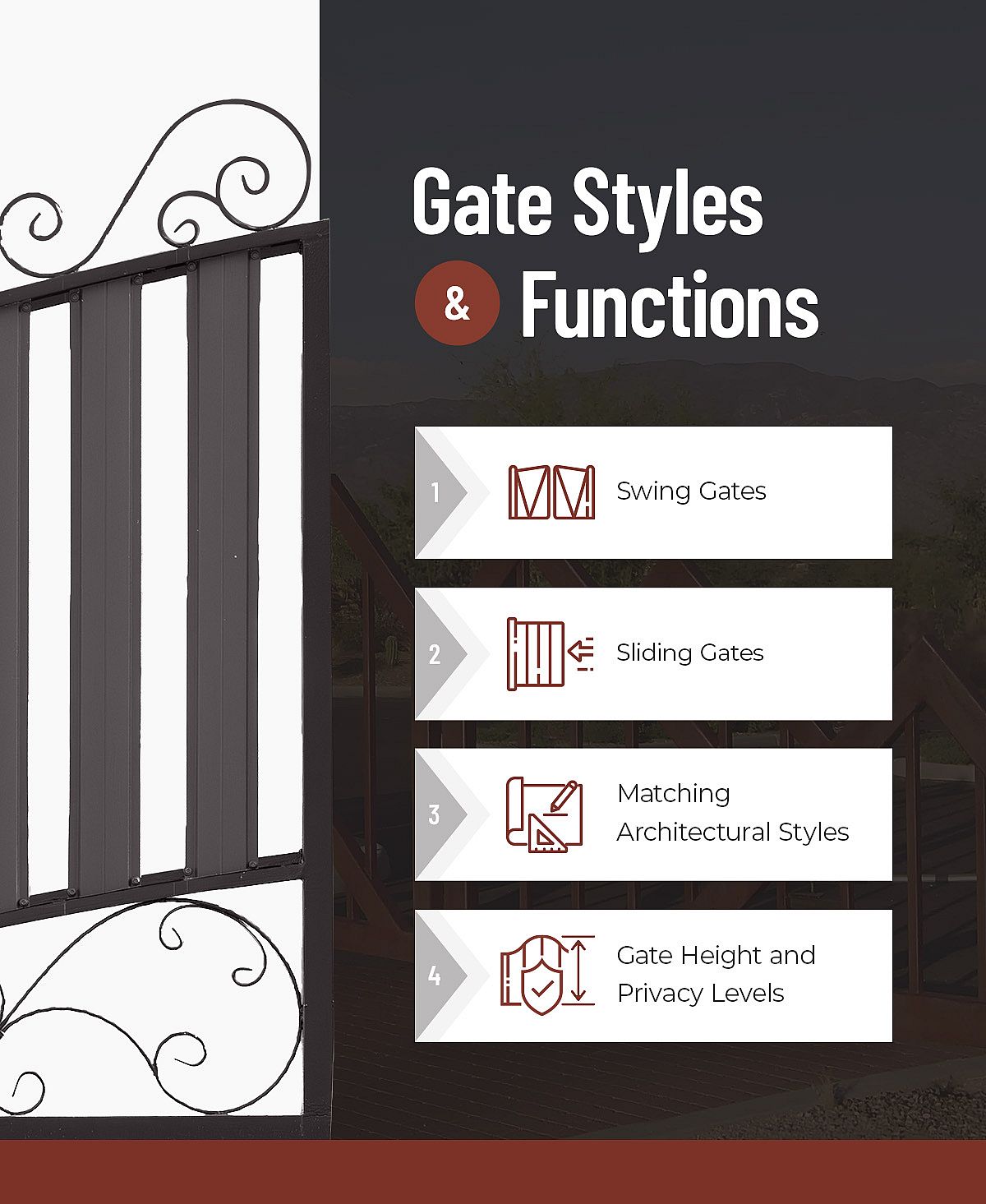
Beyond material selection, your gate’s style and operation significantly impact daily usability and long-term satisfaction. Understanding the different types of gates for homes helps ensure your choice fits both your property’s physical constraints and your aesthetic preferences.
The fundamental operational choice is between swing and sliding mechanisms. This decision primarily depends on the space available at your entrance.
Swing Gates
Swing gates operate like traditional doors, pivoting on hinges to open inward or outward. Their pros include:
Some cons of swing gates include:
Sliding Gates
Sliding gates move horizontally along a track, parallel to your fence line. Their main benefits are:
The drawbacks of sliding gates include:
The choice often depends entirely on your property’s entrance layout. Sliding gates are generally preferred for limited spaces, sloped areas, and high-wind resistance, while swing gates offer classic, grand aesthetics for larger, level properties with adequate clearance.
Matching Architectural Styles
Your gate should harmonize with your home’s architectural character. Different house styles pair naturally with different gate designs. For example:
You can explore custom gates in various styles to ensure your entrance complements the property’s existing design.
Gate Height and Privacy Levels
Gate height and design opacity involve balancing privacy and security against aesthetics and neighborhood character. Taller, solid gates offer maximum privacy by blocking sight lines and creating complete visual separation from the street. This works well for pool areas, courtyards, or properties where seclusion is a priority.
Shorter gates with open designs — featuring vertical bars or geometric cutouts — can feel more welcoming and maintain visual connection with your surroundings. Many neighborhoods prefer this approach to avoid a fortress-like appearance while still providing security benefits.
Local regulations may restrict gate height, particularly in subdivisions with homeowner’s associations. Check these requirements before finalizing your design to avoid compliance issues.
Modern residential gates can integrate technology that enhances both convenience and security beyond the physical barrier itself.
Automation
Automated gate systems offer significant practical advantages, primarily convenience — you control gate access from inside your vehicle, eliminating the need to exit in extreme weather conditions or late at night when personal safety is a concern.
Automation also improves security. You can grant or deny access remotely, screen visitors before allowing entry, and maintain a controlled environment without physical interaction at the gate. For families with children or elderly residents, this eliminates the physical effort and potential hazards of manually operating heavy gates.
For homeowners interested in gate automation systems, the installation includes motors, control systems, and safety features that prevent the gate from closing on vehicles or pedestrians.
Access Control Options
Automated gates support various access control technologies suited to different household needs. Simple remote controls or clickers work well for single-family homes where only residents need regular access. Each family member gets their own remote, and extras can be provided to trusted service providers.
Keypad systems add flexibility by allowing you to create temporary access codes for guests, contractors, or delivery personnel. You can change or delete these codes as needed, maintaining security without distributing physical devices.
Integrated smart home systems are the most advanced option, connecting your gate to smartphone apps that allow control from anywhere. These systems often include features like access logs showing when the gate opened, video intercom capabilities, and integration with other security devices like cameras and alarm systems.
Gate Maintenance and Installation
A gate’s lifespan depends heavily on two factors: quality installation and consistent maintenance. Both deserve careful attention to protect your investment.
Long-Term Gate Care
When choosing your gate, remember that different designs and materials require different maintenance. Regular maintenance keeps gates functioning properly and prevents minor issues from becoming expensive repairs.
Routine maintenance includes:
Professional installation is critical for gate safety, proper function, and longevity. Improperly installed gates can be safety hazards, failing to stop when obstructed or falling from inadequate support. They also won’t perform reliably, potentially leading to frustration, premature component failure, and insufficient security.
Professional installers provide essential services:
Choosing the right gate for your home involves balancing three essential factors: durability in your location’s climate conditions, security that protects your property and family, and a style that complements your home’s architecture. The materials you select determine how well your gate withstands the elements and daily usage.
Beyond material choice, functional decisions matter, including swing versus sliding gates, automation, and height. Professional installation helps ensure your gate functions safely and reliably from day one, while regular maintenance extends its lifespan.
By understanding these interconnected choices, homeowners can select a gate that serves as a beautiful, secure, and durable addition to their property for years to come.
This story was produced by Kaiser Garage Doors & Gates and reviewed and distributed by Stacker.


Support Bristow Beat - Donate Today!